A solid railing isn’t just a nice touch on your above ground pool deck, it’s a safety requirement in most jurisdictions and the difference between a backyard eyesore and a polished outdoor space. Whether you’re installing your first deck or upgrading an existing one, choosing the right railing balances code compliance with aesthetic appeal. The good news: you’ve got plenty of options in 2026, from sleek modern designs to budget-conscious alternatives that don’t compromise on strength or looks. This guide walks you through seven practical railing solutions that work for above ground pools, so you can find what fits your style, skill level, and wallet.
Table of Contents
ToggleKey Takeaways
- Above ground pool deck railing ideas must meet the IRC requirement that a 4-inch sphere cannot pass through, balancing safety compliance with aesthetic appeal.
- Metal railings such as aluminum ($40–$100 per linear foot) and steel offer durability and low maintenance, while ornamental iron designs add visual interest at higher costs ($150–$300+ per linear foot).
- Wood, composite, and glass options provide diverse styles: wood railings cost $2–$15 per linear foot, composite materials require minimal upkeep, and premium tempered glass railings deliver unobstructed views at $75–$150+ per linear foot.
- Budget-conscious homeowners can use pressure-treated wood balusters, vinyl picket panels, or cable railing infill for code-compliant solutions starting at $3–$40 per linear foot.
- Always use corrosion-resistant fasteners (stainless steel or galvanized) and apply appropriate sealants or coatings every 2–5 years to extend the life of your pool deck railing system.
Metal Railing Options for Modern Pool Decks
Aluminum and Steel Designs
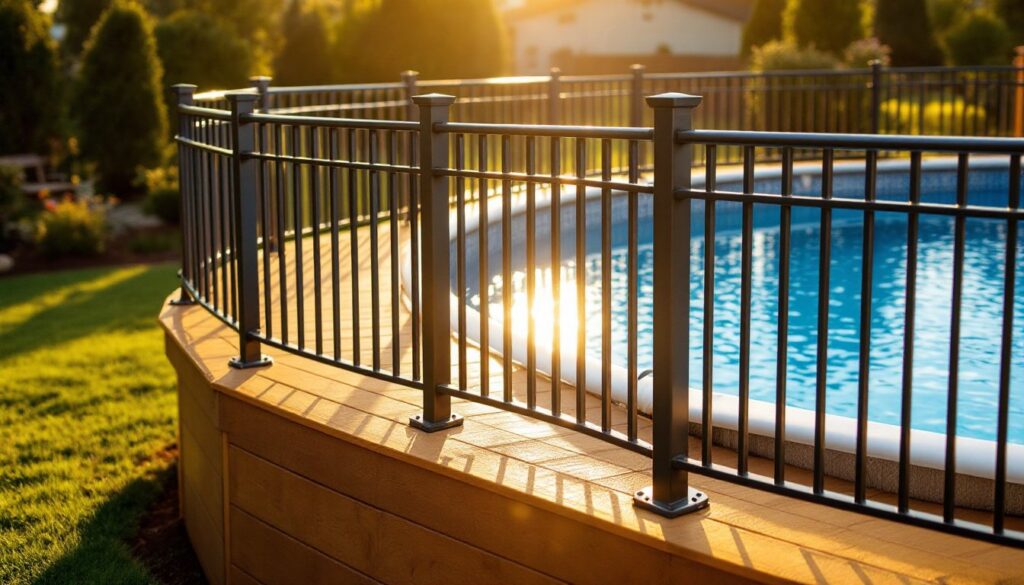
Metal railings are a popular choice for pool decks because they’re durable, weather-resistant, and require minimal maintenance. Aluminum is lightweight and corrosion-resistant, making it ideal for poolside environments where moisture is constant. It won’t rust like untreated steel, and it’s easy to install compared to heavier materials. A typical aluminum railing system uses 2-inch or 2.5-inch diameter posts spaced 5 to 6 feet apart, with horizontal or vertical balusters (the smaller vertical pieces between posts) set no more than 4 inches apart, this spacing meets the IRC (International Residential Code) requirement that a 4-inch sphere can’t pass through.
Steel railings offer a more industrial, contemporary look and are stronger, though they require regular coating (powder-coated finishes are most durable) to prevent rust in wet conditions. Pre-made aluminum and steel railing kits are widely available and come in modular sections, reducing installation complexity. Most bolt together at the deck frame without requiring welding, which is a huge advantage for DIYers. Expect to spend $40 to $100 per linear foot for quality aluminum systems.
Ornamental Iron and Custom Metalwork
If you want something with more visual interest, ornamental iron railings, featuring scrollwork, decorative balusters, or custom designs, can transform a utilitarian deck into a showpiece. These are typically powder-coated steel and often come pre-fabricated in panels, though custom work from a local metalworker allows true personalization. The trade-off is cost and installation: custom ornamental work runs $150 to $300+ per linear foot and usually requires professional installation or at least experienced DIY help.
Ornamental options work especially well if your home has classical, Mediterranean, or transitional architecture. The tight spacing of decorative balusters naturally meets code requirements, and the visual weight of the design can make a large pool area feel intentional rather than utilitarian. Check that any custom work has above ground pool maintenance schedules built in, touching up powder coating every 3–5 years keeps rust at bay.
Wood Railing Designs That Complement Your Pool Area
Wood railings offer warmth and traditional appeal, though poolside environments demand proper material selection and maintenance. Standard pressure-treated lumber (typically 2×4 or 2×6 for the top rail) is the most affordable option at $2 to $6 per linear foot. Pressure treatment protects against rot and insect damage, but the wood still expands and contracts with temperature swings, so expect seasonal movement and the need to tighten bolts annually.
For a more upscale look, consider cedar or redwood, naturally rot-resistant species with beautiful grain that ages gracefully. These cost more ($8 to $15 per linear foot) and still benefit from a water-repellent sealant applied every 2–3 years. If you’re building a wood rail, follow the same balusters-spacing rule (4-inch maximum sphere clearance per IRC). Use corrosion-resistant fasteners (stainless steel or hot-dipped galvanized) throughout: regular steel bolts will rust and stain the wood.
Composite and Treated Wood Solutions
Composite decking materials, made from wood fibers and plastic, are gaining traction for railings because they resist rot and require minimal upkeep. They don’t need staining or sealing, and they won’t splinter or gray over time. Cost runs $8 to $18 per linear foot, higher than wood but lower than some metal options. Composites do expand in direct sun more than wood, so account for thermal movement when fastening. Many pool landscaping ideas pair composite railings with pressure-treated structural members for cost balance.
Installation is straightforward: composite boards bolt to pressure-treated posts or a metal frame. Because the material is heavier than wood, ensure your deck structure (joists and footings) can handle the added load. If your above ground pool sits on a sand base or loose soil, you may need to reinforce the deck foundation before adding a heavier railing system. This is where a quick consultation with a structural engineer (or your local building official) can save headaches, and money, later.
Glass Panel Railings for Unobstructed Views
Glass railings are the premium choice for pool decks when you want an unobstructed view of the water while maintaining safety. Tempered glass panels, typically 3/8 or 1/2 inch thick, are strong enough to meet code and resist impact. The panels slide into aluminum or stainless steel channels, creating a frameless or semi-frameless look that feels sleek and contemporary.
Tempered glass is heat-treated to be four times stronger than standard glass and crumbles into small, non-sharp pieces if broken (instead of dangerous shards). This is crucial poolside, where kids and rough play happen. A typical glass railing system costs $75 to $150+ per linear foot installed, making it the most expensive option. But, the payoff is aesthetic: your deck becomes an extension of the water view rather than a visual barrier.
Installation requires precision. The posts and channels must be perfectly plumb and level, or panels won’t fit snugly. If you’re experienced with construction, DIY installation is possible: use a level constantly and leave tiny gaps for thermal expansion. For most homeowners, hiring a professional glazier ensures the job is done right and the warranty applies. Maintenance is minimal, occasional cleaning with glass cleaner, but inspect channels seasonally for debris and ensure drainage holes stay clear so water doesn’t pool inside the frame.
Budget-Friendly Railing Ideas
If you’re working with a tight budget, there are solid options that don’t mean compromising on safety. Basic pressure-treated wood railings with vertical balusters spaced 4 inches apart are code-compliant and can be built for $15 to $30 per linear foot if you do the labor yourself. Grab the lumber, a miter saw (or circular saw), a level, and a drill, then follow free DIY furniture plans or woodworking guides to build it from scratch.
Standard vinyl picket panels, typically 4 feet wide and modular, can replace balusters entirely. They’re often cheaper than wood ($3 to $8 per linear foot for the infill) and require zero maintenance. The trade-off is that vinyl sometimes looks plastic-y and may yellow slightly over time, though modern brands have improved. Pair budget vinyl infill with quality pressure-treated posts and a solid 2×6 top rail, and your railing still reads as intentional.
Another option: cable railing infill, thin stainless steel cables strung horizontally between posts, spaced to meet the 4-inch rule. Cables cost $20 to $40 per linear foot and have a modern, minimalist vibe. They’re easier to install than balusters (just loop cable through end fittings and tighten) and they don’t obstruct sightlines the way solid infill does. For the absolute smallest budget, even a simple post-and-rail frame (two horizontal 2x4s) offers basic safety and can be upgraded later as funds allow. Whichever route you choose, use corrosion-resistant fasteners and don’t skip surface prep, paint or sealant applied to clean, dry surfaces lasts far longer.