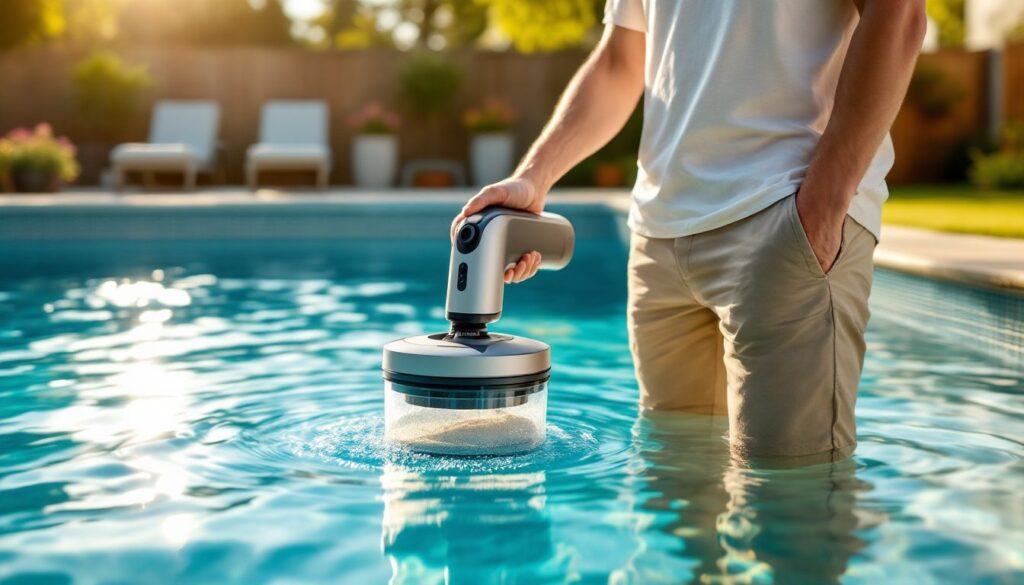
If you own an above ground pool, you know the routine: skim the surface, brush the walls, and vacuum the floor. But manual vacuuming is exhausting, time-consuming, and honestly? It’s the chore nobody looks forward to. A cordless pool vacuum changes that equation. These handheld, battery-powered devices let you clean your pool without dragging hoses or dealing with the mess of traditional vacuums. They’re faster, quieter, and give you actual control over where you’re cleaning. In this guide, we’ll walk you through what makes a cordless pool vacuum worth the investment, which features matter most, and how to pick the right one for your pool size.
Table of Contents
ToggleKey Takeaways
- A cordless pool vacuum eliminates the hassle of traditional vacuums by offering lightweight design (3-7 pounds), quiet operation, and the ability to clean a small to medium above ground pool in 15 to 30 minutes.
- Battery life of 60 to 90 minutes is essential for most above ground pools, and lithium-ion batteries with 2 to 4 hour charging times are the standard—consider swappable battery packs for pools over 15,000 gallons.
- Suction power should be at least 80 CFM for fine debris and 100+ CFM for heavier debris, paired with a 1.5 to 2 liter filter basket to minimize interruptions during cleaning.
- Match your cordless pool vacuum selection to pool size: compact models for under 5,000 gallons, mid-range options with 80+ CFM for 5,000 to 15,000 gallon pools, and high-capacity models with swappable batteries for larger pools.
- Extend your cordless vacuum’s lifespan to 5+ years through proper battery maintenance (charge between 20-80%), regular filter rinsing after each use, quarterly housing inspections, and seasonal storage with desiccant packets.
Why Cordless Pool Vacuums Are Game Changers For Above Ground Pools
Let’s be honest: traditional pool vacuums come with headaches. They require long hoses, heavy lifting, wet hands fumbling with connections, and plenty of storage space. A cordless model eliminates most of that friction.
Cordless vacuums are lightweight, usually between 3 and 7 pounds, so you’re not straining your shoulders or back while cleaning. They operate quietly, which means early morning or evening maintenance won’t wake the neighbors. Most importantly, they’re quick. You can handle a small to medium-sized pool in 15 to 30 minutes, compared to an hour or more with manual methods.
They’re also genuinely portable. Toss it in a storage bin, not a 30-foot hose coiled in your garage. And because they’re cordless, you get unobstructed movement around the pool, no tripping over cables or untangling knots mid-clean. For homeowners with above ground pools, this convenience translates directly into you actually using the vacuum regularly instead of avoiding the chore.
Key Features To Look For In A Cordless Pool Vacuum
Not all cordless vacuums are created equal. Here’s what separates a reliable cleaner from a frustration purchase.
Battery Life And Charging Time
Battery capacity is everything. Look for models offering at least 60 to 90 minutes of runtime per charge, enough to handle most above ground pools in one go. Lithium-ion batteries are standard and reliable: they hold their charge better than older nickel-cadmium types and degrade slowly over time.
Charging time matters, too. A 2 to 4 hour recharge is typical and reasonable for overnight charging. Some premium models have fast-charge modes (60 to 90 minutes), which is handy if you want to do a second pass or clean frequently. Check whether the charger is USB-compatible or proprietary: USB gives you backup charging flexibility.
One practical tip: if you have a pool over 15,000 gallons, consider a model with a swappable battery pack. You charge one while using the other, keeping the vacuum running continuously.
Suction Power And Debris Handling
Suction is measured in cubic feet per minute (CFM) or sometimes just described as “high” or “variable.” Aim for models with at least 80 CFM for fine debris like dust and algae residue. Heavier debris, leaves, twigs, large dirt clumps, requires models rated 100+ CFM.
Look at the filter basket capacity too. Smaller baskets (under 1 liter) fill quickly and need frequent emptying, interrupting your cleaning flow. A 1.5 to 2 liter capacity means fewer stops. The basket should be easy to access and rinse clean afterward.
Water depth compatibility matters more than many people realize. Most cordless vacuums work at depths from 4 to 15 feet: check your pool’s depth before buying. Some models include adjustable suction settings, letting you dial power down for delicate pool liners and up for stubborn algae or dirt buildup on the floor.
How To Choose The Right Cordless Vacuum For Your Pool Size
Pool size is the primary factor in your buying decision. Let’s break it down practically.
Small pools (under 5,000 gallons): A compact cordless model with 60 to 80 minutes of runtime is plenty. These pools clean quickly, so you don’t need a heavy-duty machine. Budget-friendly options work fine here.
Medium pools (5,000 to 15,000 gallons): This is where most above ground pools land. You need at least 80 to 90 minutes of runtime and 80+ CFM suction. A single charge should handle the entire pool. Pool cleaning products and a cordless vacuum together make maintenance manageable.
Large pools (15,000+ gallons): Consider a high-capacity model with 120+ minutes of runtime or swappable batteries. You might also look at whether a professional pool cleaning service or semi-autonomous robotic option is worth your time and money at this scale.
Also account for pool shape. Rectangular pools with flat floors are easiest for cordless vacuums. Round pools require more maneuvering, and pools with sloped bottoms or unusual shapes may leave dead zones a handheld vacuum can’t easily reach. If your pool has a complex shape, opt for a model with an adjustable handle or wand for better reach.
Water chemistry affects vacuum performance too. If your pool water is heavily algae-laden or cloudy, the motor works harder and drains the battery faster. Regular pool cleaning tablets and chemistry maintenance keep your water clear, extending vacuum battery life per charge.
Maintenance Tips To Extend Your Cordless Vacuum’s Lifespan
A cordless vacuum isn’t a set-it-and-forget-it tool. Proper care keeps it running strong for years.
Battery care: Avoid letting the battery drain completely before recharging. Lithium-ion batteries last longest when charged between 20% and 80%. Store the unit indoors in a cool, dry place, garage temperature fluctuations and direct sunlight degrade batteries faster. If you’re storing the vacuum for the off-season, charge it to about 50% before putting it away.
Filter maintenance: Rinse the filter basket after every use with fresh water from a hose, not pool water. Salt, chlorine, and algae residue clog filters and reduce suction. If you notice reduced suction performance, the filter needs deeper cleaning, use a soft brush or soak it in a bucket of fresh water for an hour. Replace filters every 2 to 3 years depending on usage frequency. Experts tested and reviewed models in comprehensive pool vacuum guides, noting that filter condition is the #1 reason for performance decline.
Motor and seals: Check for cracks in the housing or loose seals quarterly. Water entering the motor means costly repairs or replacement. If you notice leaking or hear grinding sounds, stop using the unit immediately and consult the manufacturer.
Charging contacts: Every few months, wipe the charger and battery contacts with a dry cloth to prevent corrosion. Corroded contacts reduce charging efficiency and can damage the battery.
Seasonal prep: At the end of the pool season, fully drain any water from the vacuum head, let it air-dry completely, and store it in a sealed container with a desiccant packet (those silica gel packs from product packaging work great). This prevents mold and keeps electronics safe over winter.
Regular maintenance transforms a good cordless vacuum into a tool that lasts 5+ years. Neglect it, and you’ll be shopping for a replacement in 2 to 3 years.
Conclusion
A cordless pool vacuum simplifies above ground pool maintenance in ways traditional methods simply can’t match. When you prioritize battery life, suction power, and basket capacity, you’re choosing a tool that actually gets used instead of dreaded. Pair your vacuum with consistent water chemistry management and seasonal maintenance, and you’ve got a clean pool all summer long with minimal fuss.