


Picture this: it’s a hot summer day, the sun’s shining, and all you want is a refreshing dip in your sparkling pool. But wait—what’s that? A layer of grime and a few suspicious floaties have turned your oasis into a swamp. Fear not! Cleaning a pool doesn’t have to be a Herculean task or a battle against the elements.
Importance of Cleaning a Pool
Maintaining a clean pool enhances enjoyment and promotes health. Regular cleaning eliminates bacteria and algae, which can lead to illnesses. A clean pool also minimizes the risk of skin irritation from contaminants.
Clear water allows for better visibility. Visibility in a pool contributes to safety, as swimmers can easily see any potential hazards. Clean pools also prevent equipment damage. Dirt and debris can clog filters and pumps, increasing maintenance costs.
Keeping a pool clean improves its aesthetic appeal. Visually appealing pools attract friends and family, encouraging social gatherings. A clean pool retains its value, making it an attractive selling point. Potential buyers often favor properties with well-maintained pools.
Investing time in cleaning boosts clarity and water quality. Regular chemical checks and balancing help maintain pH levels. Proper chemical balance protects swimmers, ensuring a safe swimming experience.
Effective pool cleaning fosters a pleasant swimming experience. Swimmers enjoy their time more when the water is clear and inviting. Additionally, clean pools enable better heat retention. Warm water attracts users even on cooler days.
Ultimately, cleaning a pool shouldn’t be overlooked. By prioritizing cleanliness, pool owners can ensure longevity, safety, and enjoyment.
Essential Tools for Cleaning a Pool
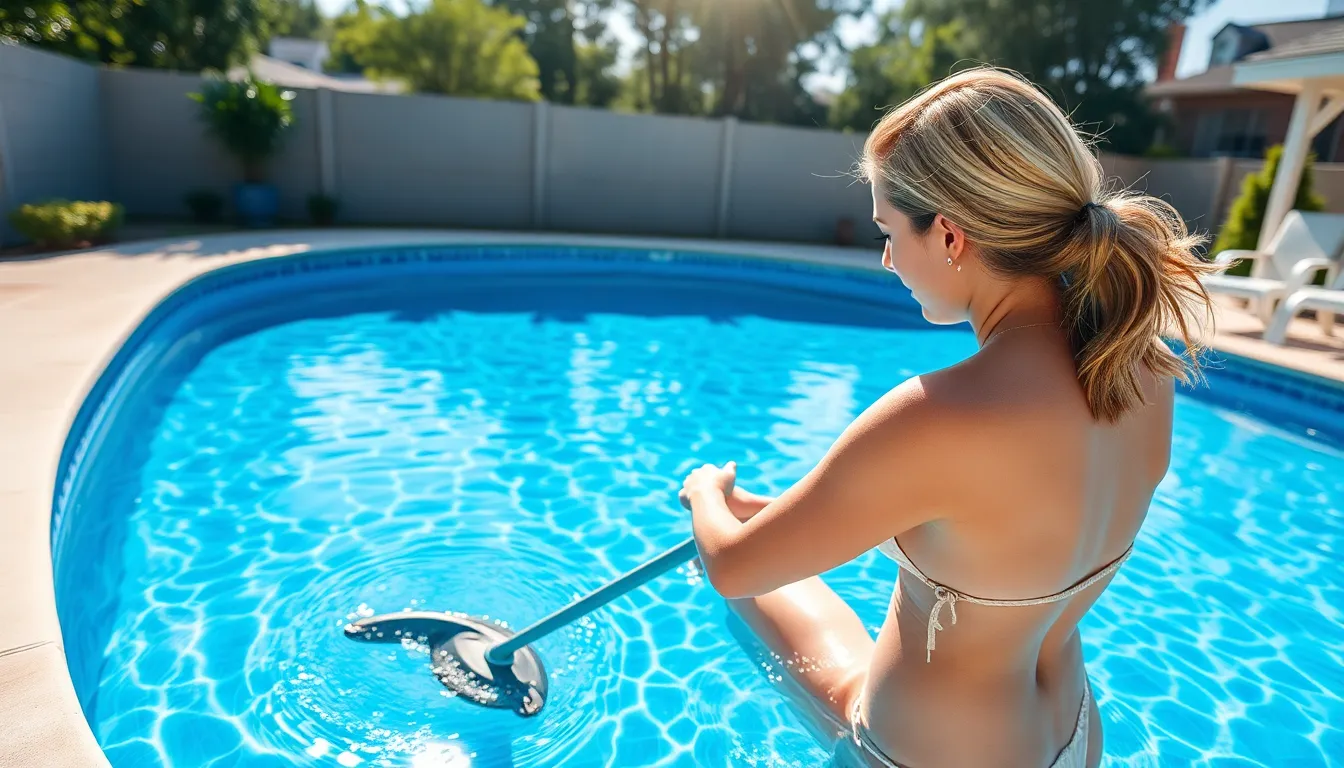
Investing in the right tools simplifies pool cleaning. Various manual and automated tools enhance efficiency and effectiveness.
Manual Tools
A skimmer removes debris from the water’s surface. It offers immediate gratification by keeping the pool clean daily. A pool brush scrubs walls and tiles, effectively dislodging dirt and algae. It tackles stubborn stains that disrupt water clarity. A vacuum cleaner can be manual or attached to a pump, allowing flexibility based on pool size. Manual vacuums require physical effort and often involve connecting to a garden hose. He or she ought to use a leaf net to capture larger debris before it sinks. Using these tools routinely contributes to better overall pool maintenance.
Automated Tools
Robotic pool cleaners save time by navigating the pool autonomously. Running on timers, they provide thorough cleaning cycles without manual effort. Suction-side cleaners connect to the pool’s filtration system, using suction to collect debris. Pressure-side cleaners utilize jets to push dirt toward an attached bag, ensuring efficient collection. Both options streamline cleaning, reducing the frequency of manual work. Pool owners benefit from investing in automated tools, as they deliver consistent performance over time. Everyone enjoys the convenience and reliability offered by modern cleaning technology.
Step-by-Step Guide for Cleaning a Pool
Cleaning a pool involves several essential steps to ensure clear and safe water. Follow this guide for straightforward methods to maintain a pristine swimming environment.
Skimming the Surface
Begin by skimming the surface of the water to remove leaves, insects, and debris. Use a skimmer net attached to a telescopic pole for efficiency. It captures floating debris quickly, preventing it from sinking to the bottom. Perform this task daily, especially during the fall season when leaves are abundant. Regular skimming improves water clarity and reduces chemical imbalance. Not only does this enhance the pool’s appearance, but it also ensures a more enjoyable swimming experience.
Scrubbing the Walls and Floor
Scrubbing the walls and floor keeps algae and dirt at bay. Select a pool brush suitable for your pool’s surface type, whether it’s plaster, tile, or vinyl. Work from the top down, starting at the waterline and moving to the floor. Conduct this cleaning weekly to prevent build-up. Focus on corners and ladders, as these areas often attract grime. Consistent brushing helps maintain a clean and inviting environment, minimizing the growth of harmful bacteria.
Vacuuming the Pool
Vacuuming the pool is crucial for deep cleaning. Use a manual vacuum or an automatic pool cleaner to reach the bottom. For manual vacuums, connect to the filter system and use a telescopic pole for maneuverability. Aim for weekly vacuuming sessions or more frequently if debris accumulation occurs. Additionally, this process removes dirt and sediment that skimming may miss. Ensuring clean bottom surfaces enhances overall water quality and aesthetics.
Balancing the Water Chemistry
Balancing the water chemistry is vital for safe swimming conditions. Test water pH, alkalinity, and chlorine levels regularly using a test kit. pH should remain between 7.2 and 7.8 for optimal sanitation. Adjust alkalinity as needed, with ideal levels around 80 to 120 ppm. Chlorine levels should be maintained between 1 and 3 ppm to effectively kill bacteria. Regularly checking and adjusting these levels promotes not only safety but also the longevity of pool equipment and surfaces. Prioritizing water chemistry ensures a healthy swimming experience.
Common Mistakes to Avoid
Avoid neglecting regular skimming of the pool surface. Daily skimming prevents the accumulation of leaves and debris, reducing cleaning time later.
Skip checking water chemistry on a consistent basis. Inadequate pH, alkalinity, and chlorine levels can lead to water clarity issues and potential health risks.
Choose not to brush the pool walls and floors frequently. Weekly scrubbing removes algae and prevents dirt build-up, ensuring a clean swimming environment.
Overlooking the importance of vacuuming presents more problems. Regular vacuuming, whether manual or automatic, contributes to removing hidden dirt and contaminants.
Don’t forget to clean the pool filter regularly. Maintaining a clean filter enhances water circulation and prolongs the life of pool equipment.
Neglecting to inspect and maintain pool equipment can lead to larger issues. Regularly checking pumps, hoses, and cleaners ensures efficient operation and reduces repair costs.
Using inappropriate cleaning products can harm pool surfaces and affect water quality. Always opt for products specifically designed for pools to avoid damaging materials.
Ignoring seasonal changes in cleaning habits is a mistake. During fall, increased leaf fall necessitates more frequent skimming and maintenance to keep the pool inviting.
Failing to pay attention to water level can lead to equipment damage. Keeping the water level within the skimmer’s operational range is crucial for efficient circulation.
Reading manufacturer instructions for pool cleaning tools is essential. Proper usage guarantees optimal performance and extends the lifespan of cleaning equipment.
Maintaining a clean pool is vital for enjoyment health and safety. By investing time in regular cleaning and using the right tools owners can ensure their pools remain inviting and safe for swimming. Following a structured cleaning routine not only enhances water quality but also protects equipment and property value.
Avoiding common maintenance mistakes can save time and prevent costly repairs. With the right approach and consistent effort a sparkling clean pool is within reach. Embracing these practices leads to a healthier swimming experience and a beautiful outdoor space that everyone can enjoy.

