A sparkling pool is the crown jewel of any backyard oasis, but let’s face it—keeping it clean can feel like a never-ending battle against dirt, leaves, and the occasional rogue rubber duck. He might think he can just float around forever, but that’s not how this works! Maintaining a pristine swimming pool isn’t just about aesthetics; it’s about ensuring a safe and inviting environment for family and friends.
Importance Of Cleaning Pool
Cleaning a pool plays a vital role in maintaining its overall health and sanitation. Regular cleaning prevents the growth of harmful bacteria, ensuring swimmers stay safe while enjoying themselves. A clean pool enhances visual appeal, making the backyard more inviting for gatherings and relaxation.
Moreover, debris like leaves and dirt can obstruct the filtration system, leading to costly repairs and increased energy consumption. Proper maintenance preserves pool equipment, extending its lifespan and saving money on future expenses. Clarity in water not only improves aesthetics but also prevents issues like algae blooms, which can complicate cleanup efforts.
Health risks associated with dirty pools include skin infections and waterborne illnesses. Keeping the pool clean minimizes these risks, allowing families to have peace of mind during swim time. Neglecting cleanliness can lead to more significant issues down the line, increasing the time and effort required for remediation.
In addition, a clean pool improves the enjoyment factor, encouraging more frequent use. Friends and family are more likely to dive in when the water appears inviting and well-maintained. Seasonal cleaning routines, including skimming debris and vacuuming, help ensure the pool remains in optimal condition.
Establishing a cleaning schedule fosters a proactive approach, resulting in less hassle over time. With adherence to proper cleaning methods, anyone can transform their pool into a pristine oasis. Comprehensive cleaning practices encompass not only the surface but also the walls, floor, and filtering system, ensuring thorough upkeep. Prioritizing cleanliness reflects a commitment to creating a safe, enjoyable environment for all.
Essential Tools For Cleaning Pool
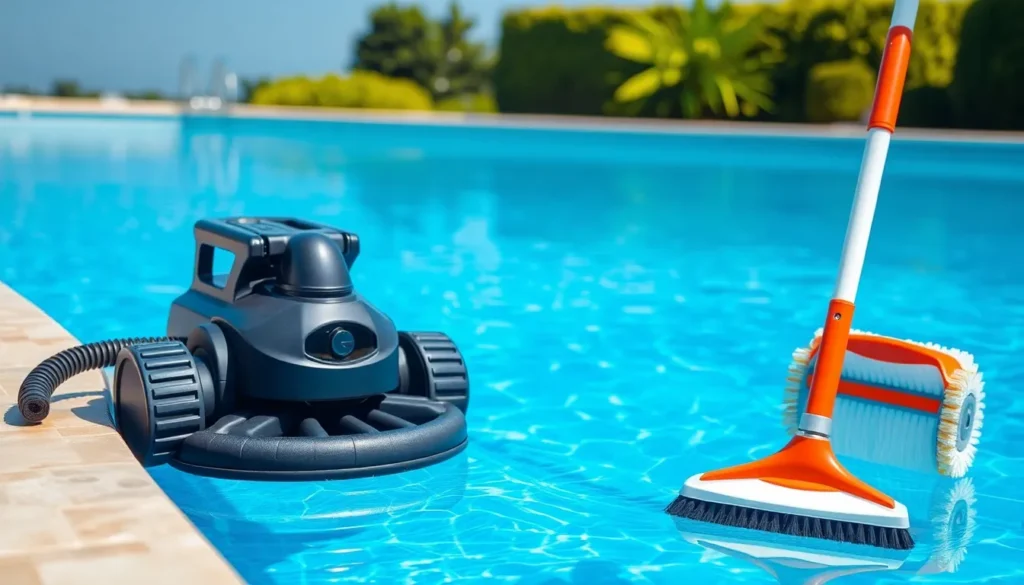
Having the right tools ensures effective pool cleaning, making maintenance more manageable and efficient. This section covers essential equipment every pool owner should consider.
Vacuum Cleaners
Vacuum cleaners play a crucial role in pool maintenance. Automatic vacuum cleaners are convenient, operating independently and cleaning the pool floor and walls. Manual vacuum cleaners offer control, allowing users to target specific areas. The right vacuum cleaner removes debris like dirt and leaves, improving water clarity. Look for models compatible with different pool surfaces to enhance versatility. Regular use prevents buildup, ensuring the pool remains inviting.
Brushes And Skimmers
Brushes and skimmers are vital for daily upkeep. Pool brushes help scrub walls and steps, dislodging algae and grime. Various types are available, including those with nylon or stainless steel bristles, catering to different surfaces. Skimmers efficiently remove floating debris like leaves and bugs from the water’s surface. Dive into using both these tools regularly to maintain a pristine pool environment. Ensuring that brushes and skimmers are in good condition maximizes their effectiveness and helps prolong the life of the pool’s filtration system.
Step-By-Step Guide To Cleaning Pool
Cleaning a pool involves several essential steps. Each action contributes to a safe, enjoyable swimming experience.
Preparing The Area
First, remove furniture, toys, and debris from the pool area. Inspect the surrounding space for any objects that could fall into the water. Clear away any leaves or branches that could contaminate the pool. Ensure that the cleaning tools are easily accessible and in good condition. Gather a pool net, vacuum, brush, and skimmer for efficient cleaning. Finally, check the pool cover for any accumulated debris if the pool isn’t in regular use. Preparation sets the stage for thorough cleaning.
Cleaning The Water Surface
Utilize a skimmer net for surface cleaning. This tool effectively eliminates leaves, insects, and debris from the water. Regular skimming prevents algae from forming and keeps the pool inviting. After skimming, check the water’s chemical balance. Measure pH and chlorine levels for optimal swimming conditions. Adjust the chemicals as needed to ensure a safe swimming environment. For persistent debris, consider using a surface cleaner or automatic pool cleaner. This equipment provides a more comprehensive clean.
Scrubbing The Walls And Floor
Start by brushing the walls and floor using a durable pool brush. This action removes algae, dirt, and grime that accumulate over time. Focus on corners and steps where debris gathers easily. Rinse the brush frequently to enhance cleaning effectiveness. Following the scrubbing, vacuum the pool to capture dislodged particles. Choose between manual and automatic vacuums based on the situation. Ensure the vacuum runs long enough to complete the job thoroughly. A clean pool interior enhances both aesthetics and swimmer health.
Common Pool Cleaning Mistakes
Neglecting regular cleaning often leads to unwanted debris accumulation. Failing to check the chemical balance can result in unsafe swimming conditions. Skipping the use of skimmers and brushes allows algae and grime to thrive.
Inadequate vacuuming means dislodged particles linger, affecting water clarity. Using the wrong vacuum type may cause inefficient cleaning, as automatic models target large areas while manual ones focus on specific spots. Ignoring the filter system can lead to clogs, which impacts performance and increases energy costs.
People often forget to clean the walls and floor. Accumulated dirt on surfaces creates an uninviting environment. It’s essential to use a durable brush to scrub these areas regularly to prevent algae buildup. Misjudging the time needed for cleaning can disrupt the entire process, impacting overall maintenance.
Relying solely on weather can lead to missed cleaning opportunities. Rain often brings extra dirt and debris, which necessitates an immediate cleanup. Timing pool cleaning tasks according to the season enhances the effectiveness of maintenance efforts.
Many underestimate the importance of a cleaning schedule. Sticking to a routine ensures consistent maintenance and a healthier pool. Frequent tasks include removing furniture and toys before cleaning, setting the stage for thorough upkeep.
Attention to detail in cleaning techniques is vital. Incorrect methods or tools may damage surfaces, leading to costly repairs. Staying informed about best practices can help prevent these issues, ensuring a well-maintained pool environment.
Tips For Maintaining A Clean Pool
Regularly testing pool water ensures the chemical balance remains safe for swimmers. Use testing strips at least once a week to check pH, chlorine, and alkalinity levels. Adjusting chemicals immediately after testing helps maintain water quality.
Vacuuming the pool weekly removes debris that skimmers might miss. Employ an automatic or manual vacuum to capture dirt from walls and the floor. Aim for thoroughness in vacuuming to enhance water clarity.
Brushing the pool walls and floor prevents algae buildup. Utilize a pool brush with sturdy bristles to scrub surfaces monthly, focusing on corners and steps. This practice prolongs the lifespan of the pool and ensures a clean appearance.
Skimming floating debris each day prevents buildup and maintains a clean surface. Use a skimmer net to collect leaves and insects, especially after windy days. Consistency in this task reduces the workload during deeper cleanings.
Cleaning the filter system regularly keeps water flowing efficiently. Inspect the filter monthly and clean or replace it as necessary. Neglected filters can restrict circulation and lead to higher energy bills.
Sound maintenance includes removing furniture and toys from the pool area before cleaning. Clearing the deck creates a better workspace and allows thorough cleaning of the entire pool environment. Consider placing items away from the pool’s edge to prevent accidental falls.
Monitoring pool water levels is crucial, especially after heavy rainfall. Adjusting the water level helps maintain skimmer function and keeps the pool balanced. Ensure the water doesn’t drop too low, leading to equipment exposure.
Creating a seasonal cleaning schedule helps maintain a cleaning routine. Plan for bi-weekly deep cleans in warmer months and monthly checks during off-seasons. Such organization makes managing pool upkeep simpler and more effective.
A clean pool is essential for enjoyment and safety. By committing to regular cleaning and maintenance practices, pool owners can create a welcoming environment for family and friends. Utilizing the right tools and techniques not only enhances the pool’s appearance but also protects against health risks associated with dirty water.
Establishing a consistent cleaning schedule tailored to seasonal needs keeps the pool in top condition. With attention to detail and a proactive approach, maintaining a pristine pool becomes manageable and rewarding. Embracing these practices ensures a safe and inviting oasis that everyone can enjoy all summer long.