


Decks are the unsung heroes of outdoor living, serving as the stage for summer barbecues and lazy Sunday afternoons. But let’s face it, a dull, worn-out deck is like a party without music—nobody wants to stick around. Enter deck paint, the magical elixir that transforms tired wood into a vibrant outdoor oasis.
What Is Deck Paint?
Deck paint is a specialized coating designed to protect and beautify outdoor wooden surfaces. It serves as a barrier against moisture, UV rays, and weather-related damage, preventing rot and discoloration. Longevity remains a crucial aspect, as quality deck paints endure harsh conditions longer than standard paints.
This type of paint contains durable resins and pigments that enhance color retention and fade resistance. Many formulations also include anti-slip additives, promoting safety for those walking on surfaces after rain. Colors range from natural wood tones to vibrant hues, allowing individuals to customize their decks according to personal preferences.
Application techniques vary, but most options require proper surface preparation to ensure adhesion and effectiveness. Cleaning the deck before painting is necessary, removing dirt, mildew, and old coatings. It’s essential to follow the manufacturer’s guidelines for drying times and conditions to achieve the best results.
Different brands offer unique properties, such as fast-drying abilities or eco-friendly compositions. Popular options include acrylic and oil-based paints, each with distinct advantages. For example, acrylic remains water-based, dries quickly, and typically lasts longer, while oil-based paints provide deeper penetration and aesthetics but take longer to cure.
Choosing the right deck paint involves considering factors like climate, deck material, and desired finish. Prioritizing quality can enhance the deck’s lifespan while adding value to a property. Selecting appropriate products ensures satisfaction with the deck’s appearance and performance for years.
Benefits of Using Deck Paint
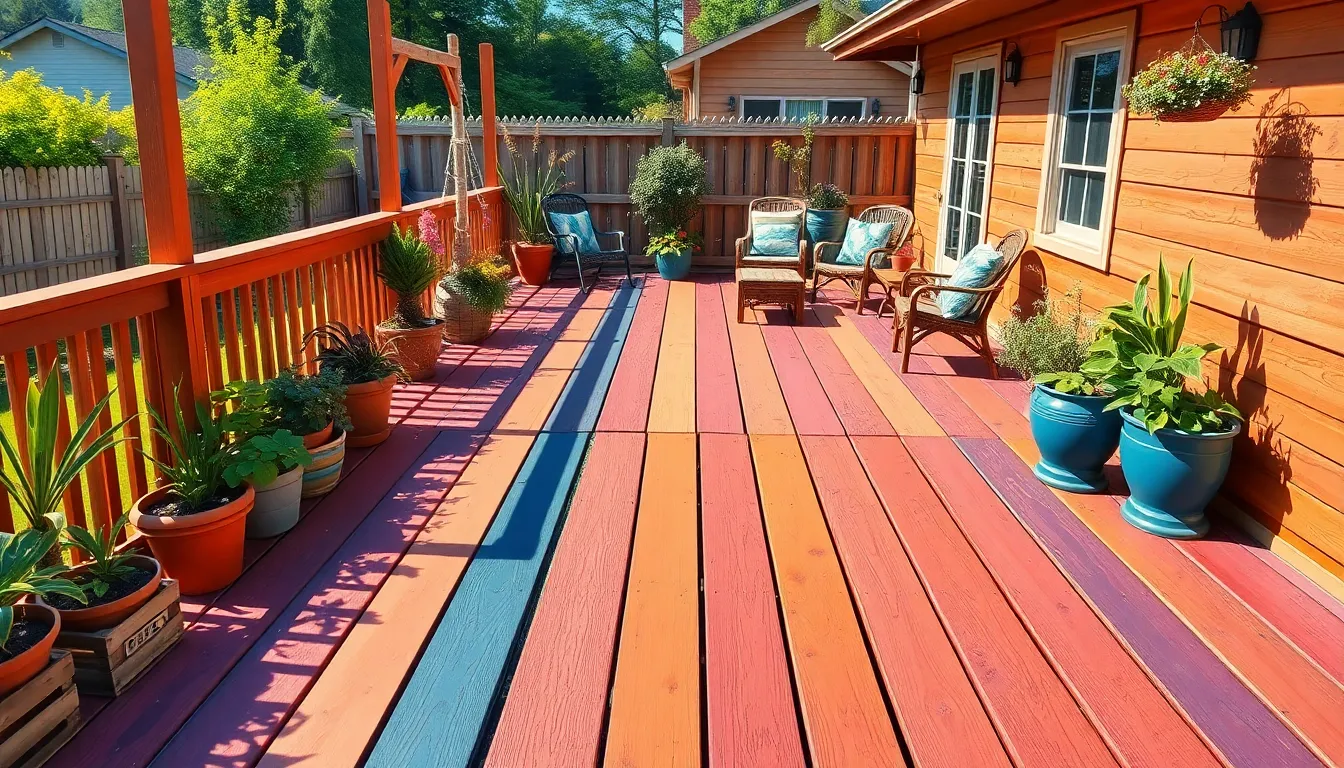
Deck paint offers numerous advantages that contribute to a deck’s longevity and appearance. Its protective qualities safeguard against weather-related challenges.
Protection Against Weather Elements
Deck paint forms a robust barrier against rain, snow, and sun exposure. This coating minimizes moisture penetration while preventing rot and mold growth. UV rays can cause significant fading and deterioration, yet high-quality deck paint contains special resins that resist these harmful effects. Both acrylic and oil-based options cater to various climate conditions, ensuring optimal performance under diverse weather scenarios. Utilizing deck paint significantly extends the life of wood surfaces, reducing the frequency and expense of repairs.
Enhancing Aesthetic Appeal
Applying deck paint transforms an outdated deck into a vibrant outdoor space. A wide variety of colors and finishes allow homeowners to customize their decks, matching personal styles or existing decor. Eco-friendly formulations often contain pigments that resist fading, ensuring colors stay bright for years. Ant-slip additives enhance the safety of painted surfaces, promoting a welcoming environment for gatherings. Well-chosen deck paint enhances curb appeal, contributing positively to property value. Each element plays a crucial role in making outdoor living spaces more inviting and enjoyable.
Types of Deck Paint
Deck paint comes in various formulations, each serving unique needs and preferences. Selecting the appropriate type ensures optimal protection and aesthetics.
Water-Based Deck Paint
Water-based deck paint offers a quick-drying solution ideal for various climates. These paints contain fewer volatile organic compounds (VOCs), making them more environmentally friendly. They adhere well to many surfaces, including wood and composite materials. Because water-based options are easier to clean up with soap and water, maintenance becomes simpler. Color retention ranks high, as these paints resist fading caused by UV exposure. Additionally, flexibility ensures that paint won’t crack or peel under changing weather conditions.
Oil-Based Deck Paint
Oil-based deck paint provides a durable finish known for excellent penetration and adhesion. This type excels in protecting wooden surfaces and minimizing moisture absorption. Due to its thicker consistency, it often requires longer drying times. However, oil-based paint creates a robust barrier that guards against extreme weather conditions. It often contains higher levels of VOCs, so proper ventilation during application is essential. Over time, these paints can enhance the natural grain of the wood, adding depth to the deck’s appearance. Ultimately, oil-based options present a strong choice for longevity and resilience.
How to Choose the Right Deck Paint
Choosing the right deck paint involves several key factors. Understanding your deck’s specific needs ensures lasting beauty and protection.
Consider Your Deck Material
Selecting the right paint starts with identifying the deck material. Wood decks often require different products than composite or vinyl decks. For wood, opt for paints designed to penetrate and protect from moisture. Also, consider the type of wood; hardwoods may need special formulations to maintain their integrity. Composite materials can utilize paints that adhere well without compromising the surface. Evaluating the material type helps in picking a paint that guarantees durability and aesthetic.
Assessing Your Climate
Assessing climate significantly influences deck paint selection. Hot, sunny areas need paints with strong UV protection to prevent fading and deterioration. Similarly, regions with high rainfall demand moisture-resistant options to avoid mold and rot. Consider seasonal changes in your area, as temperature fluctuations can affect drying and performance. For those living in areas with extreme temperature variations, choosing paint with flexibility ensures it can withstand contraction and expansion without cracking. Climate consideration helps ensure the right choice for lasting finishes.
Application Tips for Deck Paint
Proper application of deck paint ensures longevity and aesthetic appeal. Following expert guidelines enhances results and maximizes protection.
Surface Preparation
Surface preparation is vital for successful deck painting. Start by cleaning the deck thoroughly using a pressure washer or deck cleaner to remove dirt, mildew, and old paint. Next, allow the surface to dry completely, which typically takes about 24 hours. Inspect for any damage such as rot or loose boards, addressing these issues before applying paint. Sanding rough spots creates a smoother surface for better paint adhesion. Finally, applying a primer specifically designed for deck surfaces enhances the paint’s ability to stick, especially on porous wood decks.
Application Techniques
Application techniques significantly affect the final appearance and durability of deck paint. Using a high-quality brush or roller facilitates even coverage across the surface. Begin at one corner of the deck and work your way to the exit to avoid stepping on fresh paint. If using a sprayer, maintain a consistent distance from the surface to prevent dripping. For better results, apply two thin coats rather than one thick coat, allowing proper drying time between coats. Timing the application on a cooler day prevents quick evaporation of solvents, enhancing adhesion. Finally, check the weather forecast, avoiding rain or extreme temperatures within 48 hours post-application.
Choosing the right deck paint can significantly enhance not only the appearance of outdoor spaces but also their longevity. With various options available tailored to different materials and climates, it’s essential to select a product that meets specific needs. Proper application techniques and surface preparation play crucial roles in achieving the best results. By investing time and effort into deck maintenance with quality paint, homeowners can create inviting environments that elevate their outdoor living experiences. Ultimately, a well-painted deck serves as a beautiful and functional extension of the home, increasing property value and enjoyment for years to come.

