Scottsdale’s brutal desert summers are no joke. When temperatures routinely hit 110°F or higher, your HVAC system becomes less of a luxury and more of a lifeline. But that constant heavy lifting takes a toll. A well-maintained system keeps your energy bills in check and prevents the kind of breakdown that forces you to call an emergency service on the hottest day of the year, when every contractor in the valley is already booked solid. Whether you’re a seasoned DIYer or just starting to take control of home maintenance, understanding HVAC maintenance in Scottsdale means knowing what you can handle yourself and when to bring in a pro. Let’s walk through the essentials.
Table of Contents
ToggleKey Takeaways
- HVAC maintenance in Scottsdale is critical due to extreme heat and dust exposure that force air conditioning systems to work harder for 8–9 months annually, making preventive maintenance cheaper than emergency repairs costing $500–$1,500 per service call.
- Schedule professional HVAC maintenance twice yearly—in spring (March–April) before peak cooling season and fall (October–November)—while checking filters every 2–3 weeks during high-wind periods since desert dust storms can clog filters in just weeks.
- DIY maintenance tasks like replacing filters (MERV 8–11 rated for Scottsdale’s dusty environment), clearing outdoor condenser fins, and checking vents are achievable without professional certification and help extend system lifespan.
- Watch for red flags requiring professional attention: strange noises, weak airflow despite clean filters, excessive indoor humidity, visible ice on the outdoor unit, or electrical issues—these indicate refrigerant leaks, motor failure, or safety hazards beyond DIY scope.
- Choose licensed Arizona contractors verified through the ROC (Arizona Registrar of Contractors), read recent local reviews, compare written estimates from multiple providers, and consider annual service plans ($150–$300) that bundle inspections with discounted repairs.
Why HVAC Maintenance Matters in Scottsdale’s Climate
Scottsdale’s high desert environment creates unique stressors for HVAC systems. Extreme heat, dust storms, and low humidity mean your air conditioner runs hard for eight to nine months straight. A neglected system loses efficiency quickly, dust clogs filters, refrigerant leaks go unnoticed, and compressors strain under constant demand.
Regular maintenance extends system life by years, improves energy efficiency, and keeps your home comfortable when it matters most. In Scottsdale, where AC repair costs can run $500–$1,500 for a service call plus parts, preventive maintenance is genuinely cheaper than emergency repairs. You’re also protecting your warranty: most manufacturers void coverage if you skip professional inspections.
Think of it this way: your HVAC system works harder in Scottsdale than in most of the country. That’s not laziness talking, it’s thermodynamics. An outdoor unit working in 115°F heat with dust storms clogging fins needs more attention than one in a milder climate. Staying ahead of problems isn’t overengineering: it’s respecting the environment you live in.
When to Schedule HVAC Maintenance in Scottsdale
Timing matters more in Scottsdale than in cooler regions. Schedule professional maintenance twice yearly: once in spring (March or April, before peak cooling season) and again in fall (October or November, before heating season kicks in). Spring maintenance is critical, it’s your chance to catch problems before summer demand peaks.
Spring service should include a refrigerant check, capacitor inspection, compressor assessment, and a thorough cleaning of outdoor coils. Fall service focuses on heating function and ensures your system can handle mild winter days without tripping circuit breakers or losing efficiency.
If you’re doing DIY prep between professional visits, monthly filter checks during the cooling season keep your system from working blind. Summer dust storms in Scottsdale can clog filters in weeks, not months. Check your filter every 2–3 weeks during high-wind periods: you may need replacements every 30 days instead of the standard 90-day interval.
Essential DIY Maintenance Tasks You Can Do Yourself
You don’t need an EPA certification to maintain basic HVAC hygiene. These tasks take an afternoon and require only basic tools. Before starting anything, turn off power at the thermostat and the breaker panel, never work on live electrical circuits.
Filter Checks and Replacements
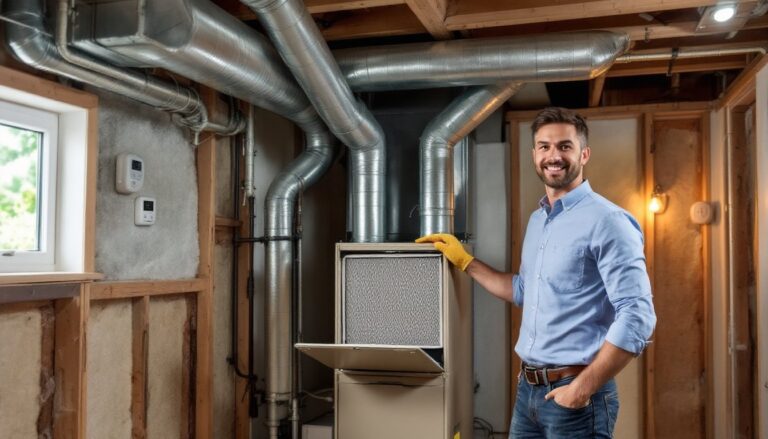
Your filter is the first defense against dust, pollen, and debris. Locate your return air filter, it’s usually in a wall-mounted or ceiling-mounted cabinet in your home, or sometimes in the furnace unit itself in the attic. Note the filter size: most homes use 16x25x1, 16x25x4, or 20x25x1 dimensions.
Slide the old filter out and check the label for a MERV rating, this measures filtration efficiency. For Scottsdale’s dusty environment, aim for MERV 8 to MERV 11 filters. Higher MERV ratings (13+) trap more particles but can restrict airflow if your system isn’t designed for them: check your manual first.
Insert the new filter with the airflow arrow pointing toward the furnace (away from the return air duct). A backwards filter defeats the purpose and stresses your system. Mark the replacement date on the frame with a marker. Budget roughly $15–$30 per filter: buying in bulk online saves money if you’re replacing every month during peak season.
Clearing Debris and Vents
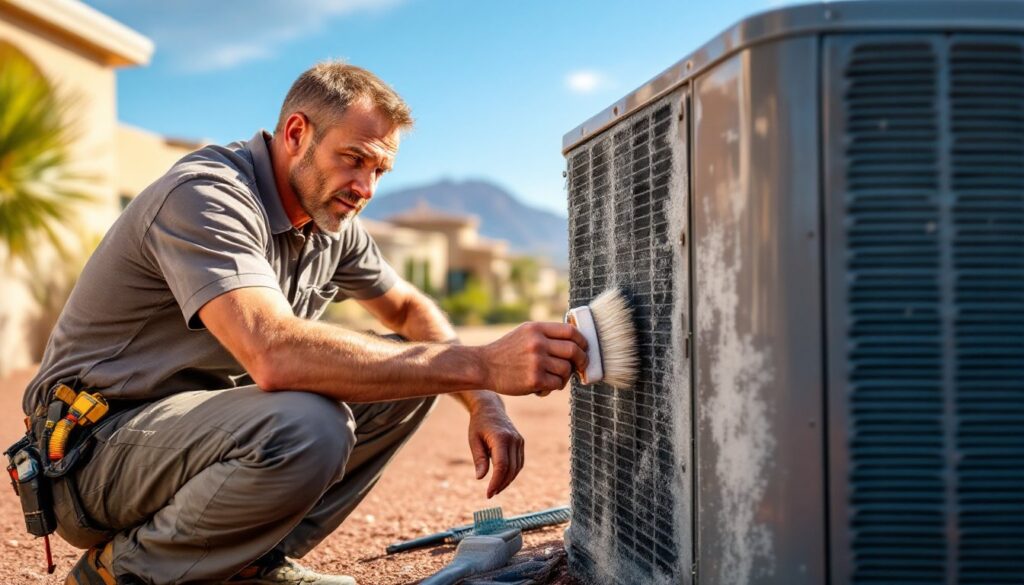
Your outdoor condenser unit, the boxy metal cabinet sitting outside, is a dust magnet in Scottsdale. Dust, pollen, and debris clog the aluminum fins, forcing the compressor to work harder and cutting efficiency by 5–15%.
Turn off power at the breaker, then use a soft brush or old toothbrush to gently clean the fins. Work from top to bottom: if fins are badly clogged, a shop vacuum on low suction helps without damaging them. Never use a pressure washer on the fins, the force bends them and defeats the purpose. A straightforward fin comb ($10–$20, available at hardware stores) can carefully straighten any bent fins.
Next, check all return air vents inside your home. Make sure they’re not blocked by furniture, curtains, or supply boxes. Blocked vents force your blower to work overtime and create dead zones in your home. Vacuum visible dust from vent grilles.
Finally, inspect the refrigerant line set, the insulated copper tubes running from your outdoor unit to the indoor coil. Look for cracks in the foam insulation. If you spot damage, call a professional: refrigerant work requires EPA certification and special tools.
Signs Your System Needs Professional Attention
Some problems demand a licensed technician. If you notice any of these, don’t DIY, call a pro.
Strange noises: Hissing suggests a refrigerant leak. Grinding or squealing often means a motor bearing is failing. Banging in the ductwork might indicate a loose panel, but it could also signal compressor trouble.
Weak airflow: If certain rooms feel stuffy even though clean filters and unblocked vents, you may have a ductwork issue, a failing blower motor, or an indoor coil problem.
High humidity indoors: Your AC removes humidity as it cools. If your home feels sticky even though the thermostat reading correct temperature, the evaporator coil might be dirty or failing, a refrigerant leak is also possible.
Visible ice on the outdoor unit: This is never normal and signals either low refrigerant, poor airflow, or thermostat malfunction. Shut the system off and call a technician immediately.
Electrical odors or breaker trips: If your AC keeps shutting off at the breaker or smells like burnt plastic when running, you have an electrical fault. This is a safety issue. Turn the system off and get professional help.
When choosing a contractor, verify they’re licensed, bonded, and insured in Arizona. Ask for references and confirm they’re familiar with your specific system brand and model.
Choosing an HVAC Professional in Scottsdale
Not all HVAC contractors are equal. In Scottsdale’s competitive market, you have options, use them.
Start by checking credentials. Arizona requires HVAC technicians to hold a valid license through the Arizona Registrar of Contractors (ROC). Ask for the license number and verify it on the ROC website. A licensed contractor carries liability insurance and workers’ compensation: never hire anyone who skips this.
Read reviews on trusted platforms like Angi and HomeAdvisor. Focus on recent reviews mentioning local Scottsdale work, experience in desert climates matters. Detailed reviews that mention specific repairs or service interactions are more credible than vague praise.
Get written estimates from at least two contractors before deciding. The estimate should specify what work will be done, parts used, labor costs, and timeline. Avoid the cheapest quote: rock-bottom pricing often means corners are cut on parts or warranty terms. Compare value, not just price.
Ask about warranty coverage. Reputable contractors typically offer 1–5 years on parts and labor. Some offer manufacturer extended warranties that require annual service visits, confirm whether that’s a real benefit or just a tie-in.
For ongoing maintenance, consider a service plan. Many local contractors offer seasonal maintenance packages bundling spring and fall inspections with discounted repairs. Plans typically cost $150–$300 annually and can save money if you actually use the included maintenance.