As the days grow shorter and temperatures start to dip, your HVAC system is about to enter one of its busiest seasons. Fall is the ideal time to get your heating and cooling system ready for the demanding months ahead, before cold weather locks in and service calls pile up. Performing HVAC fall maintenance now can save you from costly breakdowns mid-winter, reduce energy bills, and ensure your home stays comfortable all season long. Think of it like prepping your truck before a long road trip: a little preventive work now beats a roadside emergency later. The good news is that most homeowners can handle basic fall HVAC maintenance themselves, and the tasks don’t require advanced skills or specialized tools.
Table of Contents
ToggleKey Takeaways
- HVAC fall maintenance prevents costly winter breakdowns and can reduce energy bills by 5–10% through filter replacement, air sealing, and duct insulation.
- Replace or clean your air filter—the easiest fall maintenance task—every 1 to 3 months to maintain airflow and system efficiency.
- Schedule a professional HVAC inspection in September or early October (before demand peaks) to catch refrigerant leaks, electrical faults, and worn components for $100–$200, preventing $500–$1,500 emergency repairs later.
- Seal air leaks around windows, doors, basement rim joists, and exposed ductwork with caulk, weather-stripping, and duct insulation to prevent conditioned air loss.
- Clean your outdoor condenser unit and all vents (supply, return, and intake) by removing debris and ensuring 2 feet of clear space around the unit for optimal heat exchange.
- Test your heating system on a mild fall day to verify proper operation and thermostat calibration before the first cold snap arrives.
Why Fall HVAC Maintenance Matters
Your HVAC system works overtime in fall and winter, heating your home as outdoor temperatures drop. A well-maintained system runs efficiently, keeps utility costs down, and, most importantly, prevents sudden failures when you need it most. Neglected systems accumulate dust, debris, and strain on components like compressors and blower motors, leading to reduced airflow, uneven heating, and premature wear.
Fall maintenance also extends the lifespan of your equipment. Regular cleaning and inspection can add years to your system’s life, which matters because a full HVAC replacement can run $5,000 to $10,000 or more depending on your region and system size. Beyond cost, a failing furnace or heat pump in January creates genuine hardship for your household. Catching and fixing small issues in September or October takes an afternoon and maybe a couple of hundred dollars, while emergency repairs in winter often cost double and come with wait times.
Also, many HVAC warranties require proof of annual maintenance to remain valid. A professional inspection in fall can document that maintenance and protect your investment.
Replace Or Clean Your Air Filter
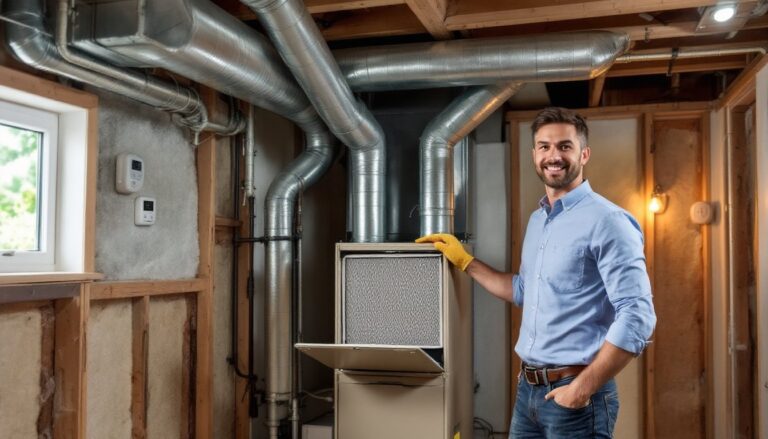
This is the easiest and most impactful fall maintenance task you can do yourself. A clogged air filter restricts airflow, forcing your system to work harder, waste energy, and potentially overheat. Most residential systems use disposable pleated filters in standard sizes like 16×25×1, 16×25×4, or 20×25×1 inches (check your current filter for exact dimensions).
Step-by-step air filter replacement:
- Turn off your furnace or HVAC system at the thermostat.
- Locate your filter, typically in a return-air duct or blower compartment, often in a basement, crawlspace, attic, or utility closet.
- Note the filter dimensions and MERV rating (a measure of filtration efficiency: standard residential filters are MERV 8 to MERV 13).
- Slide out the old filter and check the arrow printed on its frame, it shows proper airflow direction.
- Insert the new filter with the arrow pointing toward the furnace (away from the intake side).
- Turn the system back on.
If your system uses a reusable filter, vacuum or rinse it gently with water and let it dry completely before reinstalling. Replace disposable filters every 1 to 3 months depending on household dust levels, pets, and allergies, don’t wait until fall to swap a neglected spring filter.
A clogged filter costs almost nothing to replace but pays dividends in comfort and efficiency.
Inspect And Seal Air Leaks
Air leaks around your home undermine even the most efficient HVAC system. Conditioned air escapes through cracks around windows, doors, electrical outlets, and ductwork, forcing your furnace to heat more square footage than necessary and driving up bills.
Common leak locations:
- Around window and door frames (check for gaps where frame meets drywall)
- Along basement rim joists where the foundation meets the sill plate
- Around recessed light fixtures in ceilings
- Where ductwork connects or runs through unconditioned spaces (attics, crawlspaces)
- Around penetrations for plumbing, electrical, and HVAC lines
Sealing approach:
Start with a visual inspection and feel for drafts on windy days. Caulk small gaps (under 1/4 inch) around frames with paintable latex caulk, it’s cheap, forgiving, and easy to clean up. For larger gaps, use foam backer rod before caulking. Weather-strip doors and movable windows with adhesive-backed foam tape or rubber gaskets.
If you have exposed ductwork in an unheated space like an attic, wrap it with duct insulation (typically R-6 or R-8 wrap) and seal joints with HVAC-rated foil tape, not standard duct tape, which degrades over time. This is a critical step because uninsulated ducts in cold attics can lose 10–20% of heated air before it reaches your rooms.
Sealing leaks is low-skill work with immediate payoff in comfort and modest energy savings, often 5–10% reduction in heating load.
Schedule A Professional HVAC Inspection
While you can handle filters, leaks, and basic cleaning, a professional inspection is non-negotiable once a year. A licensed HVAC technician has the tools, training, and manufacturer-specific knowledge to spot problems you cannot see, refrigerant leaks, electrical faults, combustion issues, and worn components.
Schedule the inspection in early fall (September or early October) before the heating rush drives up demand and appointment availability drops. A thorough inspection typically costs $100 to $200 depending on your region and system complexity, but catching a refrigerant leak or a failing capacitor now prevents a $500–$1,500 emergency repair mid-winter.
During a professional inspection, the technician will check refrigerant charge, electrical connections, thermostat calibration, heat exchanger condition, blower performance, and safety shutoff switches. For furnaces, they’ll verify proper combustion and check that the flue drafts correctly (critical for carbon monoxide safety). For heat pumps, they’ll test both heating and cooling modes.
If you haven’t had maintenance in over a year, or if your system is over 10 years old, don’t skip this step. According to HVAC preventative maintenance guides, annual professional service is the gold standard for system longevity and safety. Your local home service platforms can connect you with vetted HVAC contractors in your area and provide cost estimates for your specific system.
Clean Your Outdoor Unit And Vents
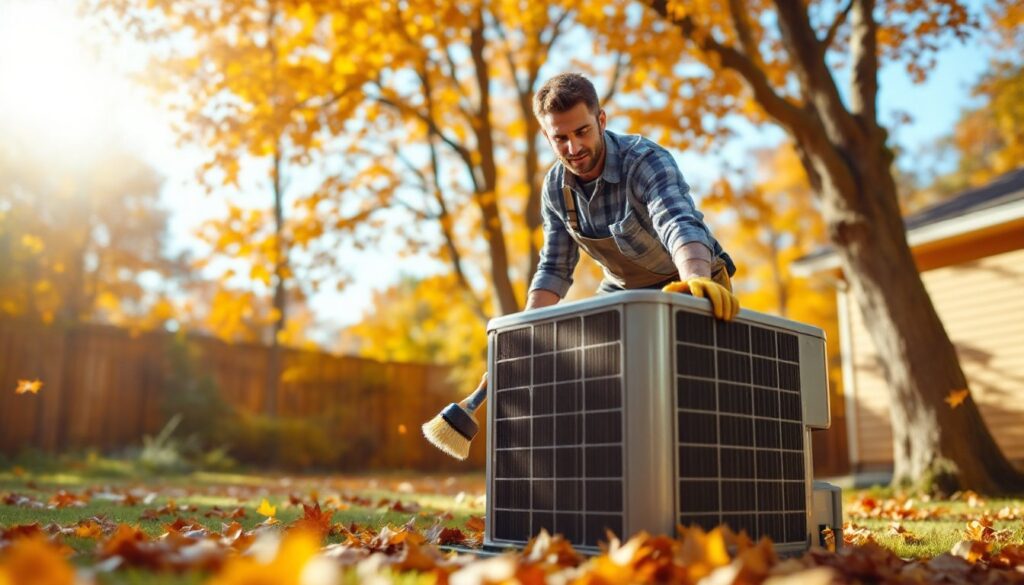
Heat pumps and central air conditioners have an outdoor condenser unit that collects leaves, dirt, grass clippings, and debris. A clogged unit struggles to exchange heat efficiently and can overheat, triggering shutdowns or compressor damage.
Outdoor unit cleaning:
- Turn off the unit at the breaker or disconnect switch before opening the access panel.
- Gently brush leaves and visible debris from the fins with a soft brush or compressed air (canned air or a shop compressor set to low pressure: never use a pressure washer, which can bend the delicate aluminum fins).
- If there’s substantial buildup, vacuum the exterior carefully with a soft brush attachment.
- Check that there’s at least 2 feet of clear space on all sides of the unit, trim back vegetation and clear any stored items.
- Inspect the unit for obvious damage: bent fins, loose panels, or disconnected electrical connectors. Note any issues for your professional technician.
Also inspect your home’s vents: return-air vents (where air gets pulled into the system), supply vents (where conditioned air blows out), and any outside intakes for your furnace or heat pump. Make sure they’re not blocked by dust, pet hair, or furniture. Blocked vents reduce system efficiency and can cause uneven heating or cooling in certain rooms.
For return-air vents in walls or ceilings, vacuum the grille and check that nothing is obstructing the duct behind it. Cleaning vents is quick but easily overlooked, it’s a small action with measurable results in airflow and comfort.
Test Your System And Make Final Adjustments
Before the first cold snap arrives, test your heating mode to ensure it works correctly. Do this on a mild day in early fall so that if something’s wrong, you have time to call a technician before demand peaks.
Simple heating test:
- Set your thermostat to heat mode and lower the setpoint 5 degrees below the current room temperature.
- Listen for the furnace or heat pump to ignite or activate (there should be a soft hum and then air movement).
- Feel the warm air coming from supply vents after a few seconds. All vents should deliver warm air: if some are cold, there may be a zone damper issue or a duct blockage.
- Check that the system cycles off once the room reaches setpoint and cycles back on as temperature drops, this shows the thermostat is calibrated correctly.
If you have a programmable or smart thermostat, review and adjust the fall and winter schedule now. Set temperatures for when you’re home and occupied, and lower them when you’re asleep or away to save energy. A home service guide can also advise on whether a thermostat upgrade makes sense for your home.
Note any unusual sounds (banging, rattling, squealing) or smells (burning, musty odors). These warrant a professional call. Once heating is confirmed working, you’re ready for winter, your HVAC system should now be in solid shape to handle the season without surprises.
Conclusion
Fall HVAC maintenance is one of those projects that feels small until something breaks mid-winter. A few hours spent cleaning filters, sealing leaks, and scheduling a professional inspection now will pay off in comfort, lower energy bills, and avoided emergency calls. Don’t wait until the heating season is in full swing, September and October are your window to act. Start with the easy wins (filter, outdoor unit), move on to air sealing, and ring up an HVAC tech for the deeper inspection. Your home will thank you when January arrives and your system is running strong.