Keeping an inground pool pristine used to mean hours of manual labor, skimming debris, brushing walls, and emptying filter baskets week after week. But inground pool robot vacuums have changed the game. These autonomous cleaners work around the clock, tackling everything from fine sediment to leaves while you relax poolside. If you’re tired of the grind and want crystal-clear water with minimal hands-on effort, it’s time to understand how these machines work and whether one fits your backyard.
Table of Contents
ToggleKey Takeaways
- Inground pool robot vacuums use independent filtration systems and rechargeable batteries to autonomously clean pool floors, walls, and waterlines without relying on your main pump.
- Choose an inground pool robot vacuum based on your pool size, shape, surface type, and desired coverage areas—entry-level models start at $800–$1,500 while premium units with app control reach $2,500–$5,000+.
- Robotic cleaners reduce energy costs by operating independently from your pool pump and minimize chemical imbalance by removing debris consistently, resulting in lower chlorine consumption and fewer algae blooms.
- Regular maintenance—including filter rinsing after every cycle, annual brush replacement, and proper off-season storage—keeps your robot vacuum running efficiently and extends its lifespan by years.
- Smart mapping technology in newer inground pool robot vacuum models ensures complete coverage and reduces cleaning time compared to budget models that use random navigation patterns.
What Is an Inground Pool Robot Vacuum and How Does It Work?
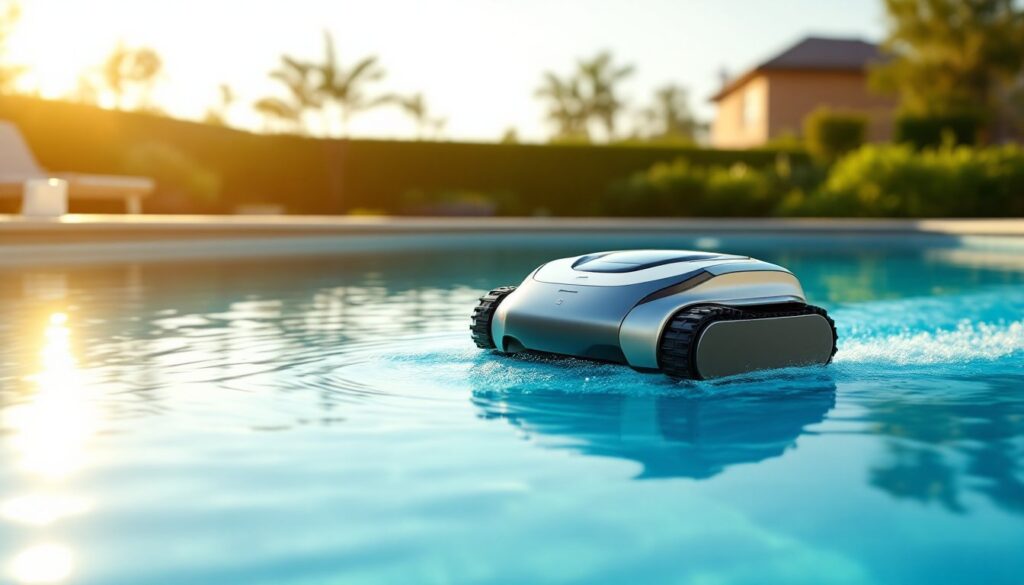
An inground pool robot vacuum is a self-contained cleaning unit that navigates your pool floor, walls, and waterline independently. Unlike traditional suction-side or pressure-side cleaners that rely on your existing pool filtration system, most modern robotic models carry their own internal pump and filtration cartridge.
Here’s how it works: The robot moves across the pool using either treads, wheels, or jet-propulsion, while brushes scrub surfaces and a suction intake pulls dirt and debris into an onboard filter bag or cartridge. Once programmed or scheduled, it descends into the water, maps the pool, and methodically cleans in a pattern until the job is done. The entire process is cordless and automated, you simply drop it in, turn it on, and let it do its thing.
These units typically run on rechargeable lithium-ion batteries and can operate for 1.5 to 3 hours per cycle, depending on pool size and model. Most come with a floating caddy or charging dock that sits poolside, making them convenient to retrieve and recharge between runs.
Key Features and Technologies to Look For
Filtration and Cleaning Power
Filtration capacity is critical. Look for models with fine mesh or cartridge filters (0.1 to 2 microns) that capture everything from algae spores to pollen. A larger filter cartridge means longer run times before cleaning. Some advanced models use multi-stage filtration with both a mesh basket (for large debris) and a fine filter (for particles), giving you thorough results.
Cleaning power depends on motor strength and brush design. Dual-brush systems outperform single-brush designs for wall and floor coverage. Check the brush type: soft brushes suit vinyl or fiberglass pools, while stiffer brushes handle tile and concrete better. The suction motor wattage typically ranges from 1,000 to 3,000 watts: higher wattage handles heavier sediment faster.
Navigation and Coverage Capabilities
Navigation technology determines how efficiently the robot covers your pool. Smart mapping technology (found in newer models) uses digital pathways to avoid redundant passes and ensure 100% coverage. Budget models use random navigation patterns, which work but take longer and may miss spots.
Coverage capability also depends on waterline and wall-climbing ability. Not all robots climb walls equally: some move only along the floor. If you want walls cleaned, confirm the model’s vertical reach and angle-climbing specs. Traction system matters too: rubber tracks grip better on curved pools, while wheels work fine on flat floors. Battery capacity and runtime directly affect how much area the robot cleans per cycle, a 2.5-hour runtime covers larger pools more efficiently than a 90-minute cycle.
Top Benefits of Using a Robotic Pool Cleaner
The primary benefit is hands-off convenience. Once you set a schedule, say, three times per week for 2 hours each, the robot handles it without you lifting a finger. This frees up weekend time and eliminates the tedium of manual brushing and skimming.
Second, robotic cleaners are energy-efficient. They draw power directly from a battery or low-voltage power cord, not from your pool pump. Traditional suction cleaners run your main pump 24/7 if left running, hiking electricity costs. A robot’s independent circulation system uses significantly less energy over time.
Third, they reduce chemical imbalance. By removing debris quickly and consistently, robotic cleaners minimize organic matter decay, which means less chlorine consumption and more stable water chemistry. Fewer algae-promoting particles in the water also mean fewer algae blooms.
Fourth, robotic cleaners extend pool component lifespan. Since they don’t rely on your main filtration system, your pump, filter, and skimmer experience less stress and wear. Regular, thorough cleaning with a robot also prevents debris buildup that can damage pool walls or corrode equipment.
Finally, they offer flexibility. Unlike permanent suction-line or pressure-line installations, you can move a robotic cleaner between pools, store it off-season, or upgrade it without plumbing modifications. This modularity appeals to homeowners who like options.
How to Choose the Right Inground Pool Robot for Your Needs
Start by measuring your pool. Robot coverage capacity is measured in gallons or square feet. A 20,000-gallon pool needs a unit rated for at least that capacity per cleaning cycle. If your robot handles 15,000 gallons in 2.5 hours, you can cover a 20,000-gallon pool with two runs or one daily run on a weekly schedule.
Next, consider your pool’s shape and surface type. Rectangular pools with flat floors are easier for robots to navigate. Pools with complex shapes, extreme deep ends (over 10 feet), or unusual angles may challenge random-navigation models. Vinyl-lined pools generally work well, but check the model’s suitability for fiberglass, plaster, or tile specifically.
Determine what areas need cleaning. Do you want floor-only coverage, or do you need walls and waterline cleaned too? Waterline cleanup matters if you have algae or mineral staining at the surface. Wall-climbing capability adds cost but delivers comprehensive results in high-traffic or sunlit pools prone to algae growth.
Budget affects your decision significantly. Entry-level robotic cleaners ($800–$1,500) offer decent floor coverage and basic filtration but lack smart mapping. Mid-range models ($1,500–$2,500) add wall climbing and improved navigation. Premium units ($2,500–$5,000+) include app control, AI mapping, and extended warranties. Compare this to professional pool cleaning equipment if you’re considering outsourcing, a robot often pays for itself in 1–2 seasons versus weekly service calls.
Review warranty and support. A 2-year coverage on the motor and battery is standard: some brands offer 3–5 years. Check replacement part availability and customer service responsiveness. Models with strong online reviews and active manufacturer support are safer bets.
Finally, assess whether setup matches your lifestyle. Cordless models require manual placement and battery charging (low friction). Corded models plug into a low-voltage transformer and offer unlimited runtime but need a poolside outlet and trailing cable management. Smart-enabled robots let you schedule and monitor via app, adding convenience if you travel or want data on cleaning patterns. Research pool cleaning products for complementary tools like skimmers and brushes if your robot doesn’t handle every task.
Maintenance Tips to Keep Your Robot Vacuum Running Efficiently
Empty and rinse the filter basket or cartridge after every cleaning cycle. Debris left inside reduces suction and clogs the intake valve over time. Most cartridges take 2–3 minutes to rinse with a garden hose: some models allow soap and acid washing quarterly for deeper cleaning. A clean filter extends motor life by years.
Inspect brushes monthly and replace them annually or when bristles show wear. Worn brushes skip debris and force the motor to work harder. Replacement brush kits cost $50–$150 and are straightforward swaps.
Check the intake valve and suction pathways for blockages. Leaves, hair, and fine sediment can lodge in tight spots. A quick visual inspection and clearing of debris prevents suction loss.
Store the robot indoors during off-season (winter or extended downtime). UV exposure and freezing temperatures degrade plastic and battery performance. Keep the battery charged at 50% during storage: fully depleting lithium-ion batteries reduces lifespan.
Clean the exterior case and waterline sensors periodically. Salt deposits and algae film can interfere with navigation sensors and optical mapping systems. A soft cloth and pool-safe cleaner solve this in seconds.
Monitor battery runtime. If the robot’s cycle time drops significantly (say, from 2.5 hours to 1.5 hours in a season), the battery is degrading. Replacement batteries cost $200–$400 but restore full performance. Most robots keep running on an aging battery: you’ll just need shorter or more frequent cycles.
For cleaning pool maintenance in general, robotic vacuums are a cornerstone tool, but pair them with manual skimming, brushing, and chemical balance checks. A robot handles the bulk work: manual tools handle the nuances.